
Manas Kamarsu
Co-founder & CTO
LinkedIn
Recycling contamination · AI camera
A compact camera that clips onto the bins you already have, catches contamination and hazards like batteries, and turns it into clear data for the people who manage recycling.
One wrong item can contaminate a whole load, and hazards like lithium batteries can start fires in trucks and facilities. Today, nobody sees what goes in until it’s too late.
The camera clips onto the bin and watches each item as it goes in.
Recyclables get a green light. Contamination and hazards like batteries get a red light, right when it matters.
Every event goes to a dashboard showing what’s going wrong, at which bin, and when.
The camera also estimates the likely plastic type (like PET or HDPE) from the container. An optional sensor module to confirm it is on our roadmap.
Batteries and other hazards get flagged before they reach the truck.
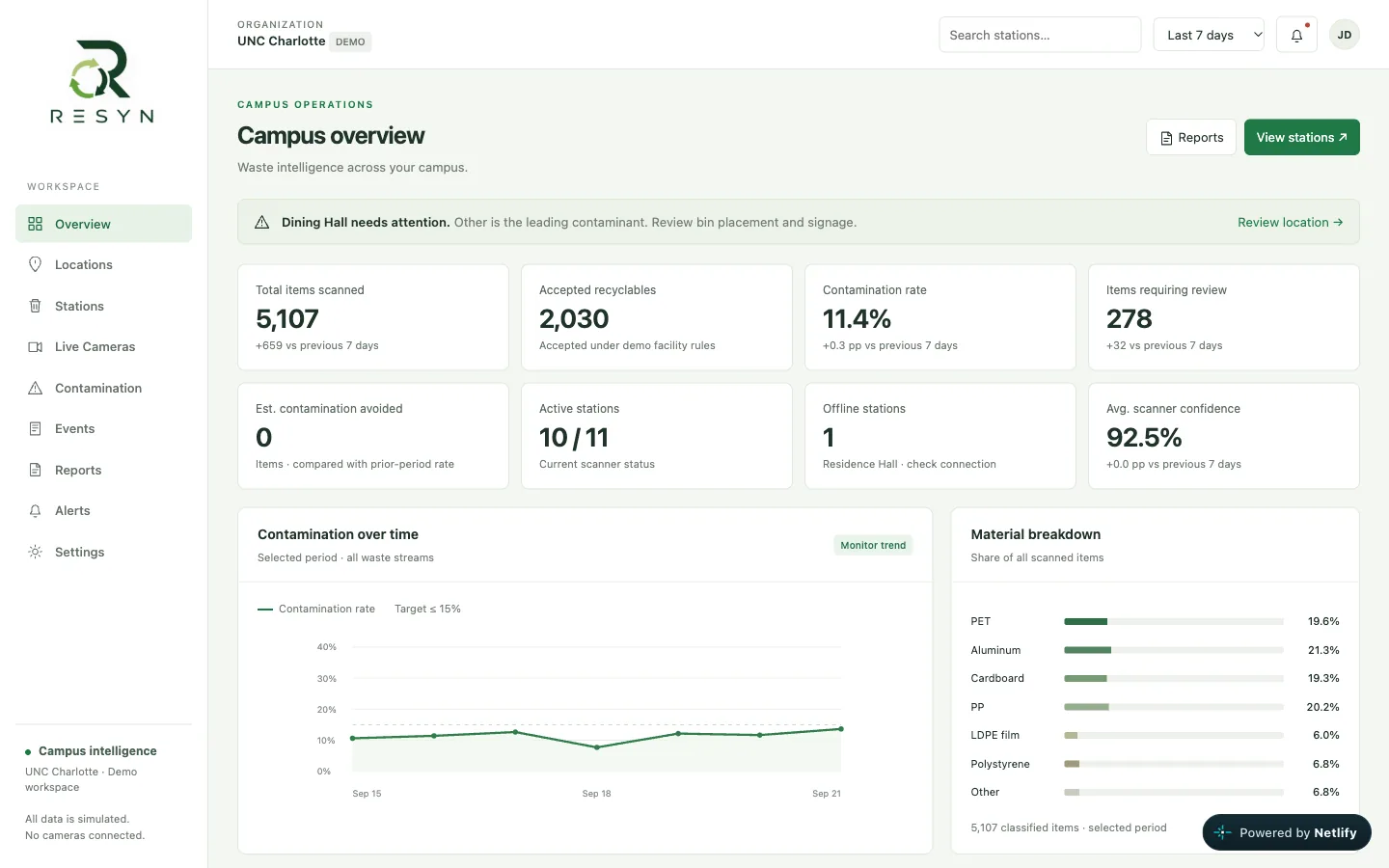
A compact AI camera that clips onto recycling bins, catches contamination and hazards, and sends the data to a dashboard.
Not yet. We’re building and testing our prototype and detection model now. Accuracy is still being measured, and we’ll share real numbers once we have them.
Common recyclables, common contaminants like plastic bags and food waste, and hazards like batteries. It estimates the likely plastic type from what the container looks like. A camera alone can’t confirm exact plastic type, so an optional sensor is on our roadmap.
No. It’s designed to clip onto existing bins with an adjustable mount.
The camera is aimed at the bin opening to look at items, not people. Privacy and data retention policies will be set with each pilot partner.
Universities, workplaces, facilities teams and county recycling programs.